55L Backpacks
Explore 55L backpacks for extended journeys and outdoor adventures requiring extra equipment. Perfect for hikers and travellers who need reliable capacity and carrying comfort.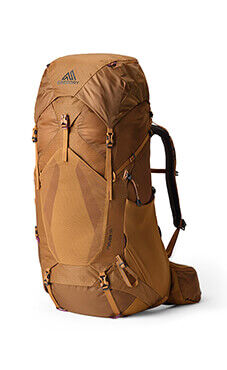


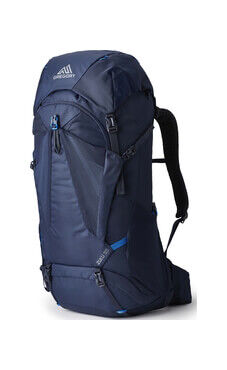

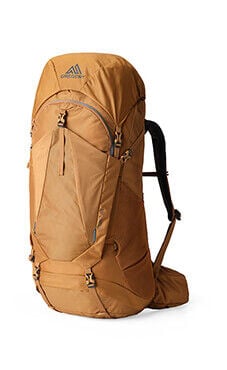


Big Loads, Handled Properly
Here's the thing about a well-loaded 55 litre pack: it weighs what it weighs. Nobody has invented a way around that, us included. What you can change is where that weight goes, how much it moves about, and whether you're still cheerful on day four. 55L backpacks are built for extended journeys and outdoor adventures requiring extra equipment, and this is the volume where suspension stops being a nice detail and starts being the whole point.
The weight has to go somewhere
Shoulders don't cope well with weight for very long. Hips handle it much better, because the load travels down through your skeleton and the strongest muscles you've got rather than hanging off your shoulder joints all day. Getting the weight from one to the other is what a suspension system is for. Everything else is detail.
What our technologies actually do
- FreeFloat: our patented suspension. A flexible panel links the hipbelt to the frame so the belt pivots and flexes as you walk instead of staying locked in place. It keeps conforming to your body as you move, which means the padding stays where it should and the load stays steady over rough ground. On a heavy pack over several days, this is the difference you feel most.
- VaporSpan: a 3D mesh backpanel suspended off your back like a trampoline. Dense and supportive low down where the weight sits, open and breathable higher up. It exists because a heavy pack pressed flat against your spine on a warm day is its own kind of misery.
- CloudControl: a stretch-flex hipbelt built for a softer, barely-there feel that still holds a load steady. For people who want support without feeling clamped in.
- AirCushion: a foamless 3D mesh backpanel that's over 90% open air, keeping contact minimal and airflow maximal.
Not every pack carries every one, and none needs to. FreeFloat and CloudControl work on the hipbelt and how the pack moves with you; VaporSpan and AirCushion work on the backpanel and how much air gets to your back. Each product page lists exactly which technologies that pack uses, and our backpack technologies hub sets them side by side.
Different priorities
- Backpacking and multi-day packs: the dependable ones. Full suspension, thorough organisation, and the capacity to carry everything for an extended trip without fuss.
- Lightweight packs: built light, with the comfort to keep going day after day. The weight comes out of the pack, not out of your kit.
Both are built in men's and women's fits, shaped around a different shoulder slope, chest shape and hip angle rather than resized from one pattern.
Getting it to sit right
At this weight, fit is the whole experience. Torso length decides your size, not height: our guide to measuring torso length takes five minutes.
Our guide to fitting a backpack covers the rest, from where the hipbelt should sit to how to use the load lifters on the move.
Where 55L sits in our range
- 50L: multi-day adventures, trekking and demanding outdoor trips.
- 55L: extended journeys and adventures needing extra equipment.
- 60L: long-distance hiking, trekking and expedition-style adventures.
- 65L and up: adventures where carrying capacity matters, with maximum storage for larger loads.
Not sure where you land? See every size in one place with shop backpacks by litres.
FAQ
Is a 55L backpack too big for one person?
Not if your trips call for it. Fifty-five litres is built for extended journeys and adventures that need extra equipment, which covers long treks, trips where you're between resupplies for a while, and anything involving bulkier gear. The real question is whether you'll fill it sensibly, because a large pack does tempt you to bring things you'd otherwise leave behind. If most of your trips are shorter, a smaller pack will be lighter and easier to live with. If you regularly find yourself strapping items to the outside of a 50L pack, this is the size to move to rather than continuing to improvise.
Why does backpack suspension matter more on bigger packs?
Because the consequences scale with the weight. A poorly carried 15L daypack is mildly annoying; a poorly carried 55L pack will make you miserable by mid-afternoon and sore by the next morning. Suspension is the system that transfers weight from your shoulders to your hips, keeps the load stable while you move, and stops the pack swinging independently of your body. Our FreeFloat suspension goes further by letting the hipbelt pivot and flex as you walk, so it stays conformed to you rather than fighting your movement. Over a few hours the difference is noticeable. Over a few days it's the difference between finishing the trip happy or enduring it.
What is a thru-hiking backpack?
Thru-hiking means walking a long-distance trail end to end, often over weeks or months, so a thru-hiking pack is built around sustained daily mileage rather than the occasional big weekend. That means keeping the pack's own weight down while holding on to genuine carrying comfort, because every gram is carried every day for a very long time. Our lightweight packs are built for exactly that: light construction with superior comfort for goal-oriented thru-hikers.
What is the difference between a multi-day and a backpacking pack?
Both describe packs built to carry a full load for several days, and at this volume they overlap considerably. The labels reflect the kind of trip each pack was designed around rather than a strict technical boundary, so it's a mistake to read one as bigger or more capable than the other. The more useful comparison is between the two specific packs you're deciding between: check the stated weight, the fit range, which technologies each one uses and how the organisation is laid out. Then choose the one that suits your body and the trips you actually take, because at this size fit will make far more difference to your experience than the name will.