65L Backpacks
For adventures where carrying capacity matters, 65L backpacks offer maximum storage, strong support and comfort for larger loads.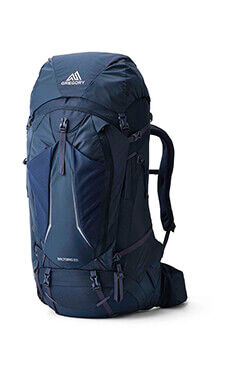


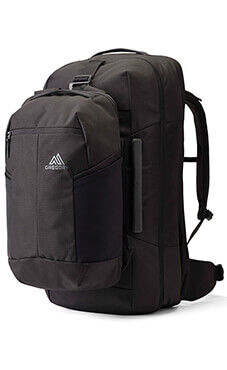


When Carrying Capacity Is the Whole Point
Some trips need everything you've got. 65L backpacks are for adventures where carrying capacity matters, offering maximum storage, strong support and comfort for larger loads. It's also where fit gets more precise, because a heavy pack carried for weeks will find every millimetre of mismatch between the pack and your body.
Fit gets more precise up here
Lower down the range, one size covers a broad spread of people and that's genuinely fine, because the loads are light. At 65 litres it isn't. Twenty kilos carried for a fortnight will find any mismatch and remind you about it daily.
So packs at this size come in several sizes, chosen on both torso length and body shape rather than torso length alone. Start with the measurement: it's the length of your back that sets your size, not your height. Our guide to measuring torso length takes five minutes, and at this volume it's the best five minutes you'll spend before the trip.
What's here
- Trekking packs: the top of our range. Built for sustained days under a full load, with the suspension, adjustability and construction to carry serious weight comfortably for weeks. These are the packs people buy once and take everywhere.
- Backpacking packs: full suspension and thorough organisation, with the capacity for extended trips and the structure to keep a big load stable. Available in plus size fits at this volume too.
- Travel bags: for longer trips where you're covering the distance by plane, train or bus rather than on foot, including options with a removable daypack that comes off for the days you're exploring.
The engineering underneath
Several packs here carry one or more of our named technologies. FreeFloat, our patented suspension, links the hipbelt to the frame through a flexible panel so the belt pivots and flexes as you walk rather than staying locked in place. VaporSpan and AirCushion are backpanel systems that keep air moving between you and the pack. CloudControl is a stretch-flex hipbelt built for a softer feel that still holds a heavy load steady. Each product page lists which ones that pack uses, and our backpack technologies hub sets them side by side.
Fits for different bodies
We build men's and women's versions shaped around a different shoulder slope, chest shape and hip angle rather than resized from one pattern. Our plus size packs are represented at this volume too, sized to a 2X–6X range with extended shoulder straps that wrap at a wider angle, longer hipbelts and load lifter hardware moved closer to the wearer so it's easier to reach while you're walking.
One thing worth knowing before you go
You can move weight between your hips and shoulders while you walk. Loosen the shoulder straps slightly and tighten the load lifters, and the load settles onto your hips, which suits long flat stretches. Reverse it and the weight shifts to your shoulders, which helps on steep climbs. On a two-week trek, alternating between the two spreads the effort around and keeps everything fresher for longer. Our guide to fitting a backpack covers the rest.
Where 65L sits in our range
- 60L: long-distance hiking, trekking and expedition-style adventures.
- 65L: adventures where carrying capacity matters, with maximum storage and support for larger loads.
- 70L: long expeditions and demanding journeys, with space for everything you need.
- Over 75L: extended expeditions and major adventures, with maximum capacity for large amounts of gear.
Not sure where you land? See every size in one place with shop backpacks by litres.
FAQ
What size 65L backpack do I need?
Packs at this size come in several sizes, chosen on both torso length and body shape rather than height. Torso length is the measurement that sets your starting point: it runs from your C7 vertebra, the bony bump at the base of your neck when you tilt your head forward, down to your iliac crest, the top ridge of your hip bones. Our guide to measuring torso length walks through it step by step. Once the pack is on, load it with a realistic weight and check the shoulder straps: they should start wrapping onto your back about 8 cm below the top of your shoulders, and if yours sit lower than that, try a larger size.
Is a 65L backpack too big for most trips?
For a weekend, yes. This size is for adventures where carrying capacity genuinely matters, which usually means extended trips, colder conditions, bulkier equipment or long stretches between resupplies. The honest risk with a big pack is that empty space invites you to fill it, and the weight you add is weight you carry every day. If most of your trips are shorter, a 50L or 55L pack will be lighter and easier to live with. If you're consistently strapping things to the outside of a smaller pack, or heading somewhere that demands more gear, this is the right place to be.
Do you make large backpacks in plus sizes?
Yes, and our plus size range extends right up to the larger capacities rather than stopping at daypacks. Plus size packs are sized to a 2X–6X range and redesigned rather than simply enlarged. The hipbelt carries extended padding and support all the way around the hips, with extended webbing that fits up to 152 cm, and the quick-access pocket sits at the front of the belt so it stays reachable. The shoulder harness gets extended length, a wider angle across the shoulders and load lifter hardware moved closer to the wearer so it's easier to adjust while you're walking. Sizing works exactly as it does across the rest of our range, based on your torso length. Browse them in plus size packs.
How do I pack a large backpack properly?
Weight placement changes how a big pack feels far more than most people expect. The usual advice is to keep heavier items close to your back and roughly level with your shoulder blades, so the load sits over your centre of gravity rather than pulling backwards. Lighter, bulkier things go low and at the outside, and anything you'll want during the day belongs in the lid or hipbelt pockets rather than at the bottom. Then use the compression straps: pulling everything in tight stops the load shifting as you walk, which is what makes a pack feel unstable. Finally, load it and adjust the fit before you leave rather than in a car park at the trailhead.