Backpacks under 20 Litres
Discover lightweight backpacks under 20L, ideal for everyday use, short hikes, commuting and active adventures. These compact packs offer enough space for your essentials while keeping you fast and comfortable.






Carry Comfortably - Down to the Last Litre
Comfort should never depend on pack size. That philosophy is easy to demonstrate on a 65L trekking pack, where there's a frame, a hipbelt and a load-lifter system doing visible work. It's much harder to prove on a small one. Which is exactly why backpacks under 20L are where we have to earn it.
Nowhere to hide at this size
Strip a pack back to 14, 15 or 18 litres and we lose the big structural tricks. No internal frame doing the heavy lifting, no substantial hipbelt transferring weight to your hips. What's left is harness geometry, backpanel shaping and how well the pack sits against your spine when you're moving: walking, jogging for the train, scrambling over a stile. Get those wrong and a 6kg load feels like 10. Get them right and the pack disappears.
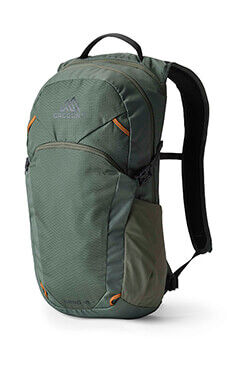
That's what we've always focused on. We still hand-build our prototypes at our headquarters, then walk them straight out the back door and test them on real terrain, not sign them off from a spreadsheet. It's unglamorous and obsessive, and it's the reason our Nano 18 weighs 0.48kg empty yet carries a recommended maximum load of 9.1kg without complaining about it.
What you're actually feeling on your back
At this size our engineering shows up in details rather than badges. Padded airmesh shoulder harnesses with one-handed sternum buckles, so you can adjust on the move instead of stopping to fiddle. Breathable die-cut backpanels that keep air circulating rather than trapping heat between you and your gear. Tuck-away webbing hipbelts that add stability when the trail turns rough and disappear when you're on the tube. Compression straps that stop a half-full pack turning into a swinging pendulum on every step. None of it announces itself. You notice it at hour four, when your shoulders still feel fine.
What you'll find under 20 litres
This isn't one type of pack, it's a whole shelf of them. The right choice depends less on how much you own and more on what your day looks like.
- Daypacks: simple, clean and versatile. One main compartment, quick-access pockets and a sleeve that takes a hydration reservoir on the trail or a tablet on the way into work. The most flexible thing you can own at this volume.
- Day hiking backpacks: more suspension, more shaping, more support. Proper hipbelts, hipbelt pockets, trekking pole attachments and adjustable torso lengths for people who want the pack to genuinely carry rather than just hang.
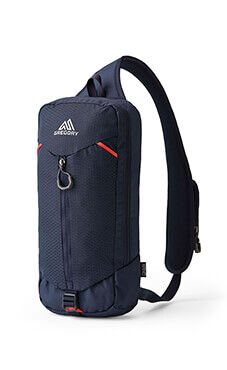
- Waistpacks, belt bags and slings: for when a full backpack is simply too much pack. A bottle, snacks, phone and keys, and no more pack than the moment asks for.
- Kids' packs: sized and shaped for smaller frames, not shrunk-down adult designs. Getting fit right early is how you end up with a kid who wants to come along again.
- Ski and alpine packs: compact volumes with gear-carry systems built for winter days, where you're moving fast and want the load pinned tight to your back.
Getting the size right
Volume tells you what fits inside. Fit tells you whether you'll enjoy carrying it. The measurement that matters is your torso length, not your height, which is why two people the same height can want different packs. Most packs at this volume come in one size and are shaped to suit a broad range of torsos, since the loads are light enough not to demand a more adjustable frame.
Where under 20L sits in our range
This is the entry point to the volume ladder, not the shallow end of it. Under 20L is your fast day: a summit push, an after-work loop, a commute, a morning out where you want to move quickly and carry little. Once your days get longer or your kit list grows with winter layers and a camera body, it's worth stepping up a size rather than overstuffing a small pack.
- Under 20L: day hikes, commuting, fast and light, kids' packs and waistpacks.
- 20L–24L: day hikes and everyday carry, when you're packing light and precisely.
- 25L–28L: extra room for clothes, gear and essentials without the bulk.
- 30L: longer day hikes, travel and outdoor adventures, with room for changing conditions.
Not sure where you land? See every size in one place with shop backpacks by litres.
FAQ
Is a backpack under 20L big enough for hiking?
For a day on the trail, yes. Under 20L comfortably takes water, a mid-layer, a waterproof shell, lunch, a small first aid kit and a headtorch, which covers short hikes and active days out. It's the volume we'd point you to for commuting, everyday use and fast-moving days where you'd rather carry less and move more. Where you'll want more room is longer day hikes in changing conditions, or trips that stretch beyond a single day. If you're regularly cramming a small pack full and forcing the zip shut, that's your sign to step up a size rather than fight it.
What fits in a backpack under 20L?
More than most people expect, provided the pack is built properly. In the 14L to 18L range you'll fit a mid-layer and a shell, one to two litres of water, food for the day, a first aid kit and your phone, keys and wallet in the quick-access pockets. Used off the trail, that same volume takes a tablet or small laptop, a notebook and a change of clothes for the gym. Below that, waistpacks, belt bags and slings sit in the 1L to 6L range and are built for the essentials only. The limiting factor is rarely capacity, it's how well the pack carries what you've put in it.
Do smaller packs get the same engineering as the bigger ones?
They're held to the same standard, but the engineering shows up differently. Our named suspension systems, like FreeFloat's flexible panel that lets the hipbelt pivot as you hike, are designed to manage heavier loads and mostly appear on larger packs where there's a frame to work with. Some packs at this size do carry one of our named systems, and the rest rely on harness geometry, backpanel shaping and hipbelt design to do the same job at a lighter weight. Every prototype is hand-built and trail-tested the same way, whatever the volume. If you want to compare the systems directly, our backpack technologies pages break down what each one does.
Can I use a small hiking backpack for commuting and everyday carry?
It's one of the things this volume does best. A pack around 16L to 18L is large enough for a tablet or small laptop, lunch and a layer, but small enough that you're not taking up two seats on a busy train. Look for a tuck-away hipbelt, which gives you stability on the trail and disappears completely for city use, and a separate internal sleeve that holds a hydration reservoir at the weekend and your tech during the week. Reflective loops are worth having for dark commutes. The advantage of buying a pack engineered for hiking is that it carries a heavy load properly, which your shoulders notice on a long day either way.