Shop by litres
Find the perfect outdoor backpack by capacity. Whether you need a compact daypack or a large expedition backpack, explore our collection sorted by litres to match every adventure, trip length and packing need.


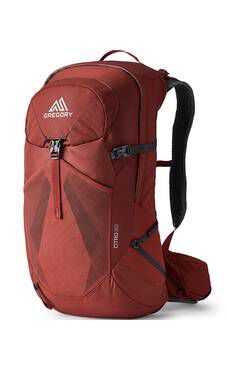
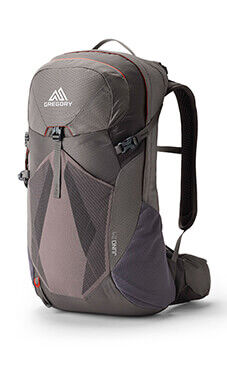


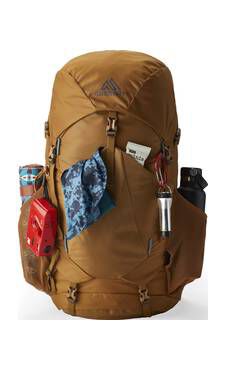


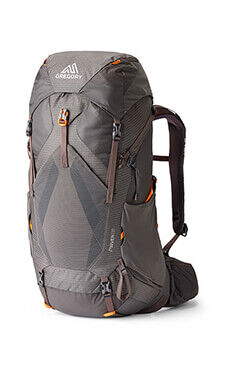


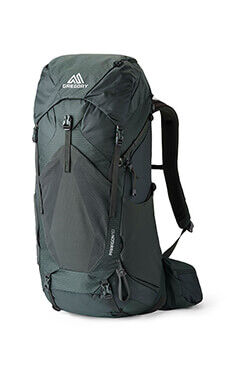


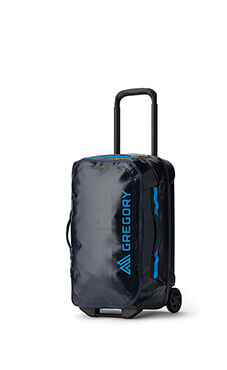


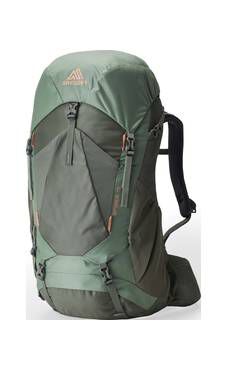


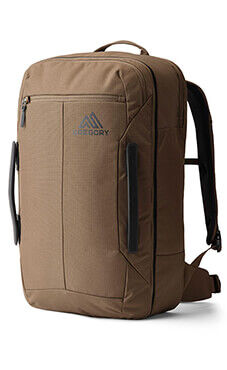






How to Choose the Right Backpack Size
Litres are a useful way to shop and a terrible way to decide. The number tells you how much fits inside; it tells you nothing about whether the pack will still feel good six hours in, which is the part you'll actually remember. So here's how we'd think it through: how long you're out for, then how it fits, then everything else.
Start with how many nights
The most reliable guide to capacity is how long you'll be away and what you're sleeping in.
| Capacity | Best for |
|---|---|
| Under 20L | Everyday use, commuting and short walks |
| 20L | Day hikes and everyday adventures |
| 25L | Full-day hikes and active weekends |
| 30L | Longer day hikes and lightweight travel |
| 35L | Overnight trips and weekend adventures |
| 40L | 2–3 day adventures and trekking trips |
| 45L | 3–4 night adventures and longer getaways |
| 50L | Multi-day trekking and camping trips |
| 55L | 4–6 night adventures with extra gear |
| 60L | Week-long treks and expeditions |
| 65L | Demanding expeditions and heavy loads |
| 70L | Long adventures where extra capacity matters |
| Over 75L | Extended expeditions and remote adventures |
Two things shift these numbers. Camping eats capacity far faster than staying under a roof, because a sleeping setup takes up space that hut-to-hut and hostel trips simply don't demand. And cold weather is bulkier than it is heavy: winter insulation will push you up a size or two without adding much to the scales.
Then get the fit right, because that's what you'll feel
Pack size is decided by your torso length, not your height. Two people who measure identically on a wall chart regularly need different packs, which is why guessing is the most common way to end up with a bag you never quite get on with.
Our guide to measuring torso length takes about five minutes and gives you the number you'll need whichever pack you're looking at.
We build men's and women's versions of many packs, each shaped around a different shoulder slope, chest shape and hip angle rather than resized from a single pattern. Our plus size packs run from daypacks right up to 70 litres, sized to a 2X–6X range with extended shoulder straps that wrap at a wider angle, longer hipbelts fitting up to 152 cm, and load lifter hardware moved closer to the wearer so it's easier to reach on the move.
Still deciding? Read the full guide
Capacity is only one part of choosing the right backpack. The trips you take, how much weight you carry, the fit of the pack and the suspension system all play a role in how comfortable it feels on the trail.
If you'd like a deeper walkthrough, read our guide to choosing the perfect hiking backpack, which will help you find a pack you'll enjoy carrying for years to come.
What's doing the work underneath
Every pack is essentially a system for moving weight off your shoulders and onto your hips, where your skeleton and your leg muscles can deal with it. Four named technologies handle different parts of that job.
- FreeFloat: our patented suspension. A flexible panel links the hipbelt to the frame so the belt pivots and flexes as you walk, staying conformed to your body instead of fighting it. The one you notice most under a heavy load.
- CloudControl: a stretch-flex hipbelt that moves naturally with you, soft and barely-there while still holding a load steady.
- VaporSpan: a 3D mesh backpanel suspended off your back like a trampoline, dense and supportive low down, open and breathable up top.
- AirCushion: a foamless 3D mesh backpanel that's over 90% open air, keeping contact with your back minimal and airflow high.
Not every pack carries all four, and none needs to. FreeFloat and CloudControl work on the hipbelt and how the pack moves with you; VaporSpan and AirCushion work on the backpanel and how much air reaches your back. Each product page lists exactly which ones that pack uses, and our backpack technologies hub compares them all side by side.
FAQ
What size backpack do I need?
Start with how long you'll be out and what you're sleeping in. Under 20L covers commuting, everyday use and short walks. Around 20L to 30L handles day hikes, with the larger end giving room for changing conditions. From 35L you're into overnight trips and weekends. Between 40L and 55L covers roughly two to six nights depending on how compact your gear is, and 60L and above is for week-long treks and expeditions. Camping pushes you up the scale faster than hut or hostel trips, and winter kit is bulkier than summer kit even when it weighs about the same. If you're between two sizes, choose for your hardest realistic trip rather than your average one.
How many litres do I need for a weekend or a week?
For a single overnight or a weekend, 35L is the size we'd point you to first. Two to three days sits comfortably at 40L, three to four nights at 45L, and four to six nights at 55L with room for extra gear. A week-long trek is where 60L earns its place. These are guides rather than rules, because your kit list matters more than the calendar: someone with compact, well-chosen gear will happily do a week out of 50L, while a winter trip with bulky insulation can fill 60L in three days. If you're consistently strapping things to the outside of your pack, that's the signal to size up.
Is it better to buy a bigger backpack than I need?
Usually not, and it's the most common mistake people make. A bigger pack weighs more empty, and more importantly it invites you to fill the space, which means carrying things you'd otherwise have left at home. Every litre you fill is weight you carry all day, every day of the trip. A small amount of headroom is genuinely useful, because a pack crammed to bursting carries badly and compression straps need something to compress. But buying two sizes up so it's ready for a trip you might take one day tends to make every trip in between slightly worse. Buy for the trips you actually take.
How do I measure myself for a backpack?
Measure your torso length, not your height. It runs from your C7 vertebra, the bony bump you can feel at the base of your neck when you tilt your head forward, down to your iliac crest, the top ridge of your hip bones. That measurement is the starting point for choosing your size, and our guide to measuring torso length walks through it step by step. Once you've got a pack on, load it with a realistic weight and check the shoulder straps. They should start wrapping onto your back about 8 cm below the top of your shoulders, and if yours sit lower than that, try a larger size.