35L Backpacks
The 35L backpacks are perfect for multi-day hikes, trekking and adventure travel. Designed for those who need more capacity while maintaining comfort and freedom of movement.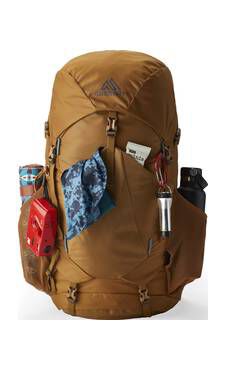


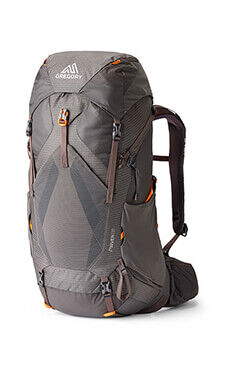


Built for More Than One Day
There's a moment when a trip stops being a walk and starts being a trip. You're not back by dark. There's a hut, a hostel, or at least a sleeping bag involved. 35L backpacks are where our range crosses that line, built for multi-day hikes, trekking and adventure travel rather than for one very long day out.
What the extra litres are actually for
Going from 30L to 35L doesn't sound like much until you try to fit a night's kit into a daypack. Sleeping bag, a change of clothes, more food, more water, and whatever the weather might do while you're out there for longer than one weather forecast can sensibly cover. Some packs at this size have a dedicated compartment at the base for a sleeping bag, which keeps the soft stuff low and stops you unpacking everything to find one thing.
What doesn't change is how it should feel. More capacity with the same freedom of movement is the harder engineering problem, and it's the one this size solves. A pack that carries three days of kit but walks like a daypack is the goal. A pack that carries three days of kit and reminds you about it every ten minutes is a pack we'd send back.
Built for a specific body
At this size, fit matters more than it does anywhere below it, because there's more weight involved. That's why so many of our packs come in men's and women's versions, and it isn't a marketing split. The difference is structural: harnesses contoured for a different shoulder slope and chest shape, and hipbelts angled for a different hip position.
These are starting points rather than rules. Bodies vary more than categories do, so if a men's pack fits your torso better than the women's equivalent, or the other way round, that's the right pack for you. Several models here also come in more than one torso size, so you can dial it in properly. Our guide to measuring torso length takes five minutes and is the single most useful thing you can do before buying at this volume. We also make plus size packs, sized to a 2X–6X range with extended straps and longer hipbelts.
The suspension underneath
Several packs at this size carry FreeFloat, our patented suspension. A flexible panel links the hipbelt to the frame so the belt pivots and flexes as you walk, staying conformed to your body rather than fighting it. Carrying a few days' kit over uneven ground, that's the difference between a pack that moves with you and one you're constantly rebalancing. Every product page lists exactly which technologies that pack uses, and our backpack technologies hub sets them side by side.
Where 35L sits in our range
- 30L: longer day hikes, travel and outdoor adventures, with room for changing conditions.
- 35L: multi-day hikes, trekking and adventure travel, where packs start carrying overnight kit.
- 40L: extended hikes and backpacking, plus travel bags, duffles and hand luggage.
- 45L: longer trips, extra equipment and changing weather.
- 50L and up: multi-day adventures, trekking and demanding outdoor trips.
Not sure where you land? See every size in one place with shop backpacks by litres.
FAQ
How many days can you hike with a 35L backpack?
It depends far more on your kit than on the calendar. Thirty-five litres is built for multi-day hikes, trekking and adventure travel, and it handles a few nights comfortably if your gear is reasonably compact. Hut-to-hut or hostel-based trips stretch furthest, because you're not carrying a tent or sleeping mat. Camping trips eat volume much faster, and if you're carrying a tent as well as a sleep system you may want to look at 40L or 45L instead. The useful question isn't how many nights, it's what you're sleeping in and how bulky your kit already is.
What is the difference between an all-around and a lightweight backpack?
The names describe design intent across a collection rather than a guarantee about any single model. Lightweight collections are built to shave grams wherever possible, which shows most at bigger volumes. All-around collections carry more structure and organisation. At 35L the weights sit close together, so the more useful comparison is between the two specific packs you're considering, not the labels they carry.
Do 35L backpacks have a sleeping bag compartment?
Several packs at this size do, and it's one of the clearest signs you've crossed from day packs into multi-day territory. A sleeping bag compartment sits at the base of the pack with its own access, so you can pull your bag out at the end of the day without emptying everything above it. It also helps with weight distribution, keeping the light, bulky, soft items low and close to your back. Not every pack at this volume includes one, so check the individual product page for the model you're considering.
Is a 35L backpack too big for hand luggage?
Often, yes. Most airline cabin allowances sit below this volume, and a loaded 35L pack with a frame and hipbelt is harder to compress into a sizer than a soft daypack. Some travellers do fly with packs this size, particularly when they're not full, but it's not something we'd plan around. If cabin-only travel matters to you, our urban packs in the 20L to 28L range are the ones designed with that in mind. Whatever you choose, airlines change their dimensions and weight limits regularly, so check your specific airline's current rules before you book.
Should I choose a men's or women's backpack?
Start with the fit designed for your body, then let your torso measurement decide. Women's models use harnesses contoured for a different shoulder slope and chest shape, and hipbelts angled for a different hip position. Men's models are shaped around different proportions again. Measure your torso using our guide to measuring torso length, check it against the size range for the pack you like, and if you can, try both. The pack that fits your torso wins every time.