45L Backpacks
Our 45L backpacks are made for serious hikers, travellers and outdoor explorers. These larger packs provide the space needed for longer trips, extra equipment and changing weather.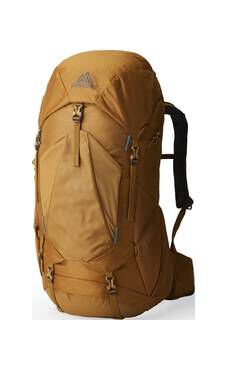


Pick Your Obsession
By this point, most people know what they're doing. 45L backpacks are made for serious hikers, travellers and outdoor explorers, and the range reflects that: packs built around every gram for people who count them, packs built to haul winter kit up a mountain, and packs designed to carry a fortnight's worth of everything in comfort. Nobody buys 45 litres by accident.
Space for the things you can't leave behind
Forty-five litres is where you stop editing. Longer trips, extra equipment and the layers you'd want if the weather changed its mind halfway through: it all fits. The headroom matters as much as the volume. Compression straps pull a part-filled load in tight against your back, and our suspension systems keep it there while you move, so the pack works whether you've packed for four days or fourteen.
Three ways to spend 45 litres
- All-around packs: the ones that do everything. Full suspension, generous organisation, hipbelt pockets and enough structure to carry a heavy, awkward load for days on end without complaint. If you're not sure which of these you need, it's this one.
- Ultra-light packs: light without giving anything up. A perimeter aluminium frame and a fibreglass anti-barrelling cross-stay keep the load stable and the carrying ability intact, so the weight you save comes off the pack rather than out of your kit. Bottom and side compression stabilise the load and take excess gear.
- Ski packs: winter specialists, with ski carry and access designed for people wearing gloves, standing in wind, halfway up the mountain. Also perfectly good for anything else where you need something strapped to the outside.
These are genuinely different tools rather than better and worse versions of the same thing. An ultra-light pack isn't a stripped-back all-around pack, and an all-around pack isn't an overbuilt ultra-light pack. Work out what your hardest trip actually asks for, then choose the one built for it.
Fit matters more here than anywhere
Forty-five litres of kit is real weight, and real weight finds every flaw in a fit. What decides your size is torso length rather than height. Our guide to measuring torso length takes five minutes and is easily the best-value five minutes in this whole process.
Once you've chosen your pack, our guide to fitting a backpack is worth reading too. There's a trick most people never learn: you can move weight between your hips and your shoulders while you're walking. Loosen the shoulder straps and tighten the load lifters and the weight settles onto your hips, which suits flatter ground and long stretches. Do the opposite and it shifts to your shoulders, which helps on steep climbs and technical ground. Small adjustment, noticeable difference by the end of the day.
Men's, women's and plus size
Many of our packs at this volume come in men's and women's versions, shaped around a different shoulder slope, chest shape and hip angle rather than resized from one pattern. Our plus size packs are also represented here, with extended shoulder straps that wrap at a wider angle, longer hipbelts and load lifter hardware moved closer to the wearer so it's easier to reach. Sizing stays consistent across all of them.
Where 45L sits in our range
- 40L: extended hikes and backpacking, plus travel bags, duffles and hand luggage.
- 45L: longer trips, extra equipment and changing weather.
- 50L: multi-day adventures, trekking and demanding outdoor trips.
- 55L and up: extended journeys and adventures needing extra equipment.
Not sure where you land? See every size in one place with shop backpacks by litres.
FAQ
What is an ultra-light backpack and should I get one?
Ultra-light packs are engineered to save weight in the pack itself rather than asking you to carry less. Ours use a perimeter aluminium frame with a fibreglass anti-barrelling cross-stay, which keeps the load stable and the carrying ability intact even though the pack weighs less, plus bottom and side compression to hold everything steady and attach anything that won't fit inside. They suit long trips where you're covering serious distance and every gram is doing a job. Our all-around packs are built around a different priority, carrying heavy and awkward loads comfortably over several days. Neither is a compromised version of the other, so compare the stated weight and features on the two product pages you're deciding between and choose for the trips you actually take.
How many days can you travel with a 45L backpack?
For travel rather than camping, 45 litres will cover a fortnight comfortably and considerably longer if you're washing clothes along the way. The limit is rarely the calendar; it's whether you're camping or staying under a roof. Camping trips eat this volume much faster than hostel or hotel trips do. It's also worth remembering that a bigger bag encourages you to fill it, and a full 45L pack is a lot of weight to move through an airport or up a hill. Pack for the trip you're taking rather than the one you're imagining, and you'll be glad of the headroom rather than resenting it.
What makes a ski backpack different from a hiking pack?
Ski packs are built around the specific circumstances of winter. Ours carry skis on the outside with full perimeter compression to keep the load streamlined for the descent, use tough snow-shedding fabric and a reinforced front panel to survive metal ski edges, and include a dedicated avalanche safety pocket with sleeves for a shovel and probe, plus a deployable helmet carry system. Hiking packs at the same volume are built for distance rather than difficulty, and organised to match. So it's not that one has more features than the other, it's what those features are for. If your winter days involve skis, take the ski pack. If they involve boots, take the hiking pack.
How should a 45L backpack sit on my body?
Load it with a realistic weight before you judge anything, because an empty pack tells you almost nothing. The top edge of the hipbelt should sit around 2.5 cm above your iliac crest, which is the top ridge of your hip bones, so the belt is carrying weight on the shelf of your hips rather than sliding down. Your shoulder straps should wrap smoothly over your shoulders and start meeting your back about 8 cm below the top of them; if they start lower than that, try a larger size. The sternum strap sits roughly at heart height and should hold the shoulder straps in position without pulling them out of shape or making it hard to breathe. Our guide to fitting a backpack covers each adjustment in order.
Do you make 45L backpacks in plus sizes?
Yes, and this is one of the volumes where our plus size range is best represented. Plus size packs are sized to a 2X–6X range and redesigned rather than simply enlarged. The hipbelt carries extended padding and support all the way around the hips, with extended webbing that fits up to 152 cm, and the quick-access pocket sits at the front of the belt so it stays reachable. The shoulder harness gets extended length, a wider angle across the shoulders and load lifter hardware moved closer to the wearer so it's easier to adjust on the move. Sizing works exactly as it does across the rest of our range, based on your torso length. See the full range in plus size packs.