25L Backpacks
Shop the ideal 25L backpack for day trips, hiking and outdoor activities. With extra room for clothing, gear and essentials, this size offers versatility without bulk.


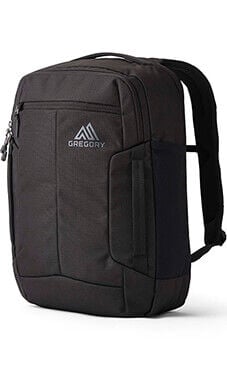


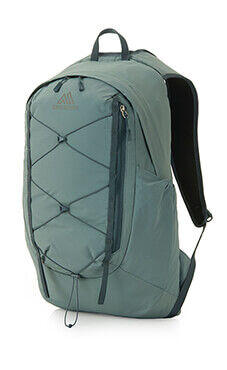


Where Packs Start Choosing Sides
At 25 litres, packs stop looking like each other. A pack built for a day in the mountains and one built for the walk to the office both hold about the same amount, and almost nothing else about them is the same. That's what makes 25L backpacks worth a bit of thought: not how much it holds, but what it's been built to hold it for.
Enough structure for the serious stuff
Somewhere around 25 to 28 litres, a pack gains enough frame and shaping to carry a heavier load properly. That matters more than the extra space does. With a real hipbelt and a shaped backpanel, most of the weight sits on your hips rather than hanging off your shoulders, and hips handle weight far better than shoulders do. It's the difference between a pack you're aware of all day and one you stop noticing after ten minutes.
Built for travel, not just the trail
For travellers trying to maximise every centimetre of their baggage allowance, a 25L to 28L backpack can be an ideal piece of underseat luggage. Packs like the Border Easy Cabin 28 offer enough room for a spare outfit, laptop, toiletries and travel essentials while staying streamlined and comfortable to carry. Combining the organisation of a suitcase with the flexibility of a backpack, they're a practical choice for weekend breaks, business travel and carry-on-only adventures.
All four of our technologies, in one place
This is the first volume where every one of our named technologies is available, including our flagship suspension. Not every pack carries all of them, and none needs to.
- FreeFloat suspension: our patented system, linking the hipbelt to the frame through a flexible panel so the belt pivots and flexes as you walk. It keeps the belt conforming to your body and steadies heavier loads on uneven ground. If you carry weight over long distances, this is the one.
- CloudControl hipbelt: stretch-flex construction that moves naturally with you, soft and barely-there but still stable and supportive. Built for freedom of movement rather than maximum load.
- VaporSpan backpanel: a 3D mesh panel suspended off your back like a trampoline, dense and supportive low down, open and breathable up top. The summer choice.
- AirCushion backpanel: a foamless 3D mesh structure that's over 90% open air, minimising contact and maximising airflow.
The simple way to navigate it: FreeFloat and CloudControl work on the hipbelt and how the pack moves with you, VaporSpan and AirCushion work on the backpanel and how cool you stay. Some packs pair one of each. Every product page lists exactly which technologies that pack uses.
What you'll find at this size
- Day hiking packs: full suspension, hipbelt pockets, trekking pole attachments, hydration compatibility and side compression, in matched men's and women's fits.
- Lightweight trail packs: built around moving fast and light, for people who'd rather cover ground than carry spare.
- Alpine packs: stripped-back, close-fitting and built for technical mountain ground, with carry systems for the sharp and pointed things.
- Daypacks: cleaner and simpler, with a main compartment, quick-access pockets and a reservoir or laptop sleeve. The flexible option if your week involves trails and trains alike.
- Everyday and urban packs: externally accessed padded laptop sleeves taking up to a 15" screen, interior organiser sleeves and pen slots, and a harness pocket for earbuds or a transit card.
Fit still decides everything
A more capable pack rewards a good fit and punishes a bad one, because there's more weight involved. Fit comes down to torso length rather than height, which is why two people the same height often need different sizes. We build matched men's and women's versions of several packs at this volume, each shaped around a different shoulder slope, chest shape and hip angle rather than resized from one pattern. We also make plus size packs, sized to a 2X–6X range with extended straps and longer hipbelts. Our plus size guide shows you how to find your size.
Where 25L sits in our range
- 20L–24L: day hikes and everyday carry, when you're packing light and precisely.
- 25L–28L: extra room for clothes, gear and essentials without the bulk. Day trips, full days out and everything in between.
- 30L: longer day hikes, travel and outdoor adventures, with room for changing conditions.
- 35L: multi-day hikes, trekking and adventure travel, where packs start carrying overnight kit.
Still deciding? The sizes above link straight through, or see every capacity in one place with shop backpacks by litres.
FAQ
What is the difference between a 20L and a 25L backpack?
Five litres sounds marginal, but it changes what the pack can do. At 20L you're packing light and precisely, with everything earning its place. At 25L there's extra room for clothing, gear and essentials, so you can throw in the layer you might not wear and still close the lid without a fight. Packs at this volume also tend to carry more frame and shaping, so a heavier load sits better on your hips instead of dragging on your shoulders. If you regularly finish a day out with your 20L stuffed to bursting, this is the size to move to.
Can you use a 25L backpack for an overnight trip?
For a hut-to-hut night or a hostel stop, comfortably yes. You're carrying a change of clothes, a warm layer, a wash kit and food rather than a tent and sleeping bag, and 25 to 28 litres handles that well. Camping is a different question. Once a tent and sleep system are involved you're into our multi-day packs, which start at 35L and are built for trekking and adventure travel while keeping comfort and freedom of movement. Experienced walkers do overnight out of a 28L pack, but that takes disciplined kit choices and lightweight gear rather than simply packing smaller.
What is FreeFloat suspension?
FreeFloat is our patented suspension system, and it's the closest thing we have to a signature. It connects the hipbelt to the pack frame through a flexible panel, letting the belt pivot and flex as you hike rather than staying rigidly fixed. The belt keeps conforming to your body shape as you move, which means consistent padding, better balance and steadier load stability when you're carrying weight over rough ground. It's designed for longer distances and heavier loads, which is why you'll find it more often as volumes increase. Our backpack technologies hub sets all four side by side.
Is a 25L backpack allowed as hand luggage?
Generally yes. Packs in the 20L to 28L range are usually compact enough to work as cabin luggage, and our urban models in particular are designed with a soft-sided shape that packs flexibly into a sizer. That said, airlines set their own dimensions and weight limits and they change them often, sometimes between booking and flying. Always check your specific airline's current cabin baggage rules before you travel rather than assuming. A soft pack has one advantage over a hard case here: it will usually compress into a frame that a rigid bag of the same volume won't.
Should I choose a lightweight pack or a fully featured one?
The names describe design intent across a collection rather than a guarantee about any single model. Lightweight collections are built to shave grams wherever possible, which shows most at bigger volumes. Fully featured packs carry more structure, padding and organisation, which pays off when the load is heavier or the ground rougher. At this size the weights sit closer together than the names suggest, so the more useful comparison is between the two specific packs you're considering rather than the labels they carry. Think about your hardest realistic day and choose for that.