30L Backpacks
Our 30L backpacks are built for longer day hikes, travel and outdoor adventures. This popular size combines generous storage with comfortable carrying for changing conditions.


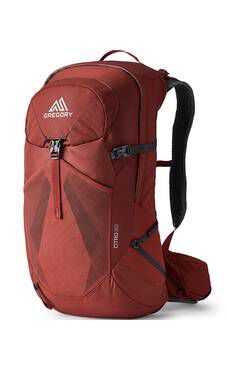


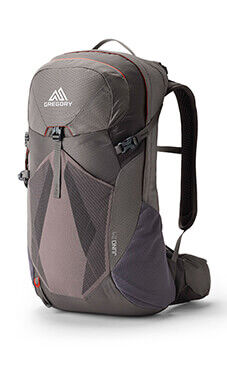


Room for the Day to Change
Put a ski pack, a travel bag and a kids' pack next to each other and you'd struggle to guess they hold the same amount. All three are 30 litres. That's the thing about this size: the number tells you very little on its own, because 30L backpacks cover a wider spread of days than most people expect. It's one of our most popular sizes, and it's easy to see why. Just worth knowing which one you're reaching for.
The margin a 25L doesn't have
The extra volume over a 25L pack isn't really about carrying more stuff. It's about carrying the stuff you might not need: the spare layer that lives in the bottom of your pack all summer and earns its place exactly once, on the day the wind gets up. Thirty litres gives you that margin while still carrying like a daypack.
It's also where our named technologies show up on more packs, and that's what you'll actually feel. A hipbelt that flexes as you walk, a backpanel that keeps air moving, a load that sits on your hips rather than pulling at your shoulders. Get that combination right and the pack is the last thing you'll think about all day.
Many kinds of pack, one capacity
- Day hiking packs: full suspension, hipbelt pockets, hydration compatibility, trekking pole attachments and side compression, in matched men's, women's and unisex fits.
- All-around packs: more structure again, for people whose long days are genuinely long and who'd rather over-build than under-build.
- Alpine packs: stripped back and cut close to the body for technical mountain ground, with carry systems for the pointy end of the kit list
- Ski packs: built for winter, with ski carry and easy access to the layers that come off and go back on roughly nine times a day.
- Travel bags: the same carrying comfort, organised around hotel rooms and airport queues rather than trailheads.
- Youth packs: proportioned for smaller frames, for the glorious day a young walker starts carrying their own kit and you stop carrying it for them.
Technologies you'll find here
Several packs at this size carry one or more of our named technologies. FreeFloat is our patented suspension: a flexible panel links the hipbelt to the frame so the belt pivots and flexes as you walk, keeping it conformed to your body and steadying a fuller load on uneven ground. CloudControl also works on the hipbelt, using stretch-flex construction that moves with you for a soft feel without losing stability. VaporSpan works on the backpanel, suspending 3D mesh off your back so air keeps moving on hot days. Some packs pair a hipbelt system with a backpanel system, and every product page lists exactly which ones that pack uses. To compare them properly, our backpack technologies hub sets them side by side.
At this size, fit does the heavy lifting
Load a 30L pack for a full day out and fit stops being a detail. A pack that's slightly wrong when it's half empty becomes properly annoying once it's full, and you'll spend the walk shrugging it back into place rather than looking where you're going.
This is where you'll start seeing packs offered in more than one torso size, and that's the point of the section. Measure once, and it tells you which size to pick on every pack we make. It takes about five minutes and saves an awful lot of blaming the pack. Our guide to measuring torso length shows you how.
Where 30L sits in our range
- 25L–28L: extra room for clothes, gear and essentials without the bulk.
- 30L: longer day hikes, travel and outdoor adventures, with room for changing conditions.
- 35L: multi-day hikes, trekking and adventure travel, where packs start carrying overnight kit.
- 40L and up: multi-day and extended trips, where our backpacking packs carry sleep systems, food and technical gear.
Not sure where you land? See every size in one place with shop backpacks by litres.
FAQ
Is a 30L backpack too big for a day hike?
Not for a longer one. Thirty litres is built for longer day hikes where conditions might change, and the extra room is mostly there for what you carry just in case: a spare layer, more food, a bigger flask, a rain shell you hope stays packed. For short local walks it's more pack than you need, and you'd be better served around 20 to 25 litres. The honest test is how far you go and how far you are from shelter. If your days run long or the weather where you walk turns quickly, the margin is worth having.
What is the difference between a 30L and a 35L backpack?
It's the point where our range changes job. Thirty litres is built for longer day hikes, travel and outdoor adventures, with generous storage for changing conditions. Thirty-five litres is where our multi-day packs begin, made for multi-day hikes, trekking and adventure travel with more capacity while keeping comfort and freedom of movement. In practice, that means 30L handles the biggest single day you're likely to have, and 35L starts handling the kit for staying out overnight. If you're choosing between the two, the deciding question isn't how much you own, it's whether you'll be sleeping away from home.
Can you use a 30L backpack for travel?
Yes, and we make packs at this size specifically for it. A travel-focused 30L bag keeps the carrying comfort of a hiking pack but organises around a different problem: getting to a hotel room rather than a summit, living out of the bag for a few days, and opening it on a bed rather than a hillside. A hiking pack works for travel too if you'd rather own one bag, though you'll be top-loading rather than opening it flat. Airlines set their own cabin dimensions and weight limits and change them regularly, so check your airline's current rules before you fly.
What makes an alpine or ski pack different from a hiking pack the same size?
Same volume, different priorities. Alpine packs are stripped back and cut close to the body, because on technical ground you want nothing catching, swinging or snagging, and they carry systems for axes and rope. Ski packs are built around winter days, with carry options for skis and easy access to layers that come off and go on repeatedly. Hiking packs at the same capacity are built for distance rather than difficulty, and organised to match. Choose by what your day looks like rather than by capacity alone.
How do I measure my torso length for a backpack?
Torso length, not height, decides which pack size fits you, and it's the single most useful thing to know before buying. You measure from your C7 vertebra, the bony bump you can feel at the base of your neck when you tilt your head forward, down to your iliac crest, the top ridge of your hip bones. Two people of the same height regularly measure differently, which is why guessing rarely works. Once you have the pack on, load it with at least 4.5 to 9 kg and check the shoulder straps: they should start wrapping onto your back about 8 cm below the top of your shoulders, and if yours sit lower than that, try a larger size. Our guide to measuring torso length walks through it step by step.
Do you make 30L backpacks for children?
We do. Our youth packs are built on frames proportioned for smaller bodies rather than scaled down from adult designs, which matters more as the load gets heavier. A 30L youth pack suits a young walker who's ready to carry their own kit on a proper day out, rather than just their lunch and a water bottle. Fit still comes down to torso length, so it's worth measuring rather than buying big and hoping. Browse the full range in our youth packs.