60L Backpacks
Built for long-distance hiking, trekking and expedition-style adventures, our 60L backpacks are ready for serious adventures. These high-capacity packs offer room for essential gear on demanding journeys.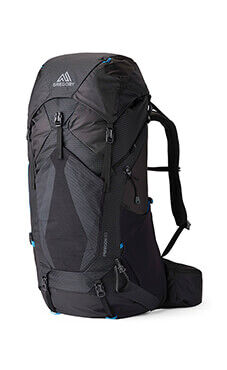


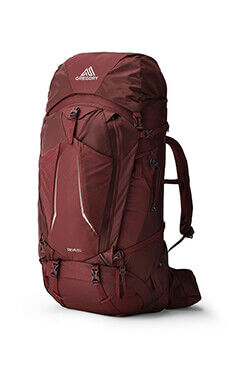


Serious Capacity, Seriously Carried
Sixty litres is not a size you buy on a whim. It's the pack you get because there's something on the calendar: a route you've been reading about for two years, a trek that needs flights, a trip where the phrase "we'll be out for a while" is doing a lot of work. 60L backpacks are built for long-distance hiking, trekking and expedition-style adventures, and this is where our trekking packs begin.
What "trekking pack" actually means
Trekking packs are built for sustained days under a full load, with the suspension, adjustability and construction to carry serious weight comfortably for weeks rather than hours. They're the packs people take when a trip has been planned for a long time and the gear needs to be beyond doubt.
The engineering matters more here than anywhere else in our range, for the simple reason that there's more weight involved and more days of carrying it. A pack that's merely acceptable at 15 kg for an afternoon becomes something you resent by day five. So the hipbelt has to keep transferring weight to your hips while you move rather than only when you stand still, the frame has to keep the load stable rather than letting it sway with every step, and your back needs somewhere for the heat to go.
Two ways to carry 60 litres
- Trekking and lightweight packs: full suspension, adjustable fit and the organisation to live out of the pack for weeks. Lightweight versions take weight out of the pack itself rather than out of your kit, which matters when every gram is carried every day for a month.
- Duffles: the other way to move 60 litres. One big opening, everything goes in, done. A packing cube keeps the clean things together and an expandable compartment takes the wet and muddy kit, so your boots aren't sharing space with your clothes. For basecamp, the back of a truck, the hold of a plane, and any trip where the bag doesn't need to come up the mountain with you.
Technologies
Several packs here carry one or more of our named technologies. FreeFloat, our patented suspension, links the hipbelt to the frame through a flexible panel so the belt pivots and flexes as you walk. VaporSpan and AirCushion are backpanel systems that keep air moving between you and the pack. CloudControl is a stretch-flex hipbelt for a softer feel without losing stability. Each product page lists which ones that pack uses, and our backpack technologies hub sets them side by side.
Fit, at this weight
At 60 litres, a badly fitted pack isn't a minor irritation, it's the thing you'll remember about the trip. Torso length decides your size rather than your height: our guide to measuring torso length takes five minutes.
Once you've chosen your pack, our guide to fitting a backpack takes you through every adjustment, including how to shift weight between your hips and shoulders as the ground changes.
Where 60L sits in our range
- 55L: extended journeys and adventures needing extra equipment.
- 60L: long-distance hiking, trekking and expedition-style adventures.
- 65L: adventures where carrying capacity matters, with maximum storage for larger loads.
- 70L and up: long expeditions and demanding journeys, with space for everything you need.
Not sure where you land? See every size in one place with shop backpacks by litres.
FAQ
What is a 60L backpack used for?
Sixty litres is built for long-distance hiking, trekking and expedition-style adventures, which in practice means trips measured in weeks rather than nights. It's the capacity you want when you're carrying everything for an extended period, when conditions might change significantly during the trip, or when you're going somewhere resupplying isn't straightforward. It's also a common choice for long-haul travel where you're moving between places on foot. If your trips are shorter or your gear is compact, a smaller pack will be lighter and easier to live with day to day.
What is the difference between a trekking pack and a backpacking pack?
Trekking packs sit at the top of our range and are built for sustained days under a full load, with the suspension, adjustability and construction to carry serious weight comfortably over long periods. Backpacking packs cover multi-day trips and shorter expeditions, with plenty of capability but built around a slightly different set of trips. In practice, the more days you'll spend carrying a heavy pack, the more the trekking tier earns its place. If your typical trip is a long weekend, you don't need it. If you're planning something that runs for weeks, it's the sensible choice.
Should I get a 60L backpack or a 60L duffle?
It depends entirely on whether you'll be walking with it. A backpack with a full suspension system puts the weight on your hips and keeps your hands free, which is the only sensible option if you're covering distance on foot. A duffle is faster to pack, easier to throw in a vehicle and better suited to bulky kit, and ours come with a packing cube plus a separate expandable compartment for wet or dirty gear. That makes it ideal for basecamp trips, expeditions where the bag travels separately, or anything where you're moving between vehicles rather than walking. Plenty of people own both and use them for different halves of the same trip.
How do I stop a heavy backpack hurting my shoulders?
Most shoulder pain on a big pack comes from the weight being in the wrong place rather than from the weight itself. Set the top edge of the hipbelt around 2.5 cm above your iliac crest, the top ridge of your hip bones, so the belt is carrying the load on the shelf of your hips instead of sliding down onto soft tissue. Your shoulder straps should wrap smoothly and start meeting your back about 8 cm below the top of your shoulders; if they start lower, the pack is likely too big for your torso. Then use your load lifters while you walk: tightening them pulls weight off your shoulders and onto your hips, and loosening them brings it back for steeper ground. Our guide to fitting a backpack walks through each adjustment.