40L Backpacks
Discover 40L backpacks made for extended hikes, backpacking trips and outdoor journeys. A versatile capacity for carrying more gear without compromising comfort.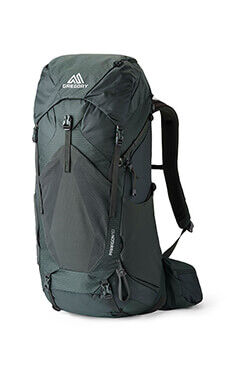








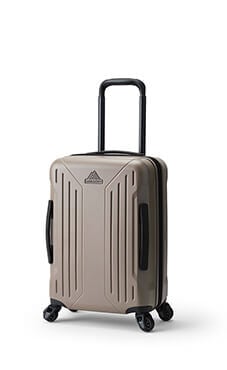


Trailheads, Terminals and Everything Between
Every size below this one is, broadly speaking, about walking. Then you get here, and the range quietly changes the subject. Yes, 40L backpacks cover extended hikes, backpacking trips and outdoor journeys. They also cover the 06:40 to Malaga, the kit bag that lives in your car boot, and the weekend where the plan is "we'll figure it out when we land." Same capacity, wildly different weekends.
Enough space to stop rationing
Forty litres is the point where packing stops being a negotiation. You're not deciding between the spare fleece and the second pair of socks. Everything goes in, the lid closes, and you get on with it. For hiking that means several days of kit with room for food and water at the start of the trip, when the load is heaviest and a pack's carrying ability actually matters. For everything else, it means a long weekend without checking a bag.
Pick your shape
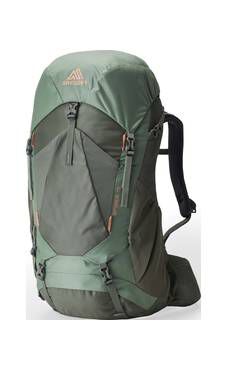
- Backpacking packs: full suspension, a proper hipbelt, compression and organisation, in men's, women's and plus size fits. Built for carrying weight over distance, which is the hardest thing a bag can be asked to do.
- Duffles: the honest workhorse. One big opening, everything goes in, done. A packing cube keeps the clean stuff together and an expandable compartment takes the wet and muddy kit, which your car boot will thank you for.
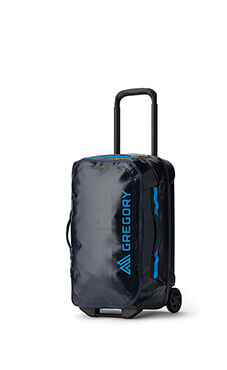
- Wheeled duffles: the same idea with wheels, for when the ground is flat and carrying it would just be showing off.
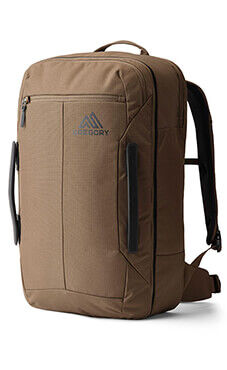
- Travel bags: built to open flat and pack like luggage, with carry comfort borrowed from our hiking packs. For trips where the walking happens between the taxi and the front desk.
- Hand luggage: sized to standard cabin dimensions, for travelling light and skipping the baggage carousel entirely.
What to actually ask yourself
The useful question at this size isn't how much you're carrying. It's how far you're carrying it, and on what. If the answer involves a trail and several hours, you want a pack with a suspension system and a hipbelt that transfers weight properly to your hips. If it involves a taxi rank, a check-in desk and about forty metres of walking, a duffle or a wheeled bag will serve you far better.
Fit, if you're carrying it on your back
Once there's real weight involved, fit stops being a preference and starts being the whole experience. Torso length decides your size, not height, and it's worth measuring rather than guessing. We also make plus size packs at this volume, sized to a 2X–6X range with extended shoulder straps that wrap at a wider angle, longer hipbelts and load lifter hardware moved closer to the wearer so it's easier to reach. Our guide to measuring torso length takes five minutes.
Several packs here carry one or more of our named technologies, which handle how the pack moves with you and how much air gets between it and your back. Each product page lists exactly which ones that pack uses, and our backpack technologies pages explain them properly.
Where 40L sits in our range
- 35L: multi-day hikes, trekking and adventure travel, where packs start carrying overnight kit.
- 40L: extended hikes and backpacking, plus travel bags, duffles and hand luggage.
- 45L: longer trips, extra equipment and changing weather.
- 50L and up: multi-day adventures, trekking and demanding outdoor trips.
Not sure where you land? See every size in one place with shop backpacks by litres. If you already know you want wheels or a wide-open duffle, head straight to duffle and travel bags.
FAQ
Is a 40L bag allowed as hand luggage?
Some of our 40L bags are designed specifically for it, built to standard cabin dimensions rather than just happening to be small enough. Look for the ones described as carry-on or hand luggage, and check the stated external dimensions on the product page rather than going by capacity alone, because two 40L bags can be very different shapes. A soft-sided bag has an advantage over a hard case if you need to squeeze into a sizer, though it won't protect anything fragile as well. Airlines set their own limits on size and weight and change them regularly, sometimes between booking and flying, so always check your specific airline's current rules before you travel.
Should I choose a backpack, a duffle or a wheeled bag?
It comes down to how far you'll carry it and what you're walking on. A backpack with a proper suspension system and hipbelt is the only sensible answer if you're covering real distance on foot, because it puts the weight on your hips and keeps your hands free. A duffle is faster to pack, easier to throw in a car and better suited to bulky kit, and ours come with a packing cube and a separate expandable compartment for wet or dirty gear, so your boots aren't sharing space with your clean clothes. A wheeled bag wins on smooth ground and heavy loads. If your trip mixes all three, work out which part will be the most challenging and choose for that.
How long a trip can you do with a 40L backpack?
Forty litres is made for extended hikes, backpacking trips and outdoor journeys, and for most people that means several days out rather than a single night. How far it stretches depends far more on what you're sleeping in than on how many days you're away. Hut-to-hut and hostel trips go a long way at this size, because the bed comes with the roof and you're only carrying clothes, food and a liner. Camping compresses that quickly once you're carrying your own sleeping setup. As a rule, if you're consistently having to squash and compress everything to make it fit, size up rather than fight it, because an overstuffed pack carries badly no matter how good the suspension is.
Do you make 40L backpacks in plus sizes?
We do, and this is one of the volumes where you'll find them. Our plus size packs are sized to a 2X–6X range and redesigned rather than simply enlarged. The hipbelt carries extended padding and support all the way around the hips, with extended webbing that fits up to 152 cm, and the quick-access pocket sits at the front of the belt so it stays reachable. The shoulder harness gets three changes: extended length, a wider angle across the shoulders for a broader and more comfortable footprint, and load lifter hardware moved closer to the wearer so it's easier to adjust on the move. Sizing works exactly as it does across the rest of our range, based on your torso length. Browse the full range in plus size packs.
Can you use a trekking pack for travelling?
You can, and plenty of people do, but there are trade-offs worth knowing. A trekking pack loads through a narrow opening at the top, so getting to something at the bottom means unpacking what's above it, which is fine on a trail and irritating in a hotel room. It also has straps and a hipbelt that can snag on baggage handling. A travel bag borrows the carry comfort but opens along its full length, so you can see and reach everything instead of digging down from the top. If you're doing genuine walking as part of the trip, take the trekking pack. If you're mostly moving between airports, stations and accommodation, take the travel bag.